



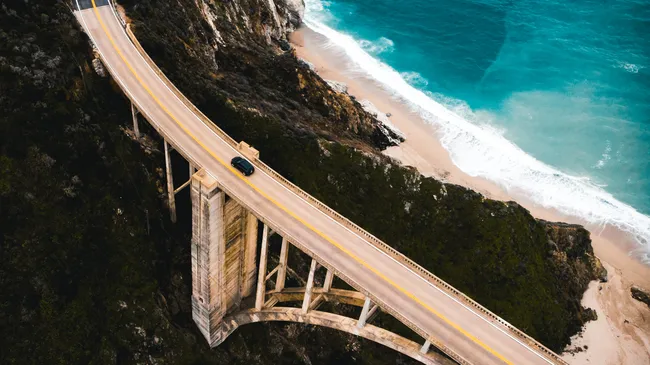
The Story of Big Sur — A Pacific Coast Highway Story
Table of Contents:
[Transcript]
The Story Behind Big Sur
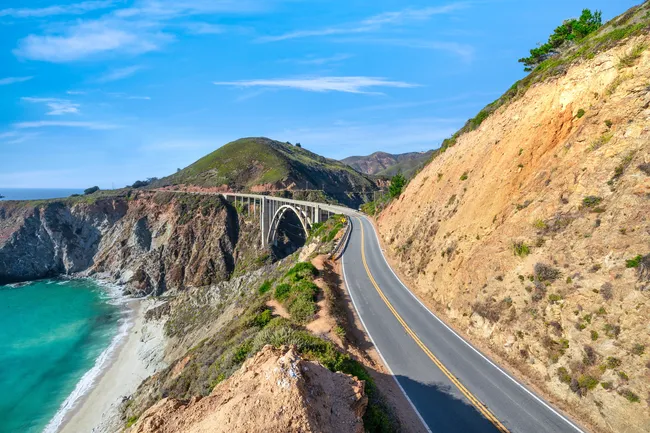
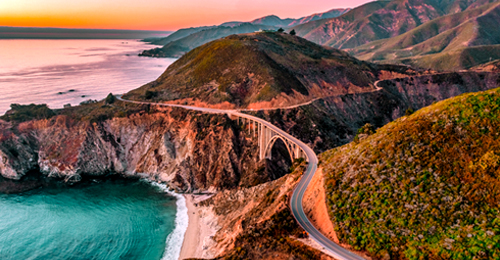
In the United States, perhaps no stretch of highway is as storied as Big Sur. So, what exactly is that story? Well, depending on who you ask, Big Sur's southernmost point is somewhere around Cambria, San Simeon, or even Morro Bay. There's no official start or end point, but generally, people think it starts around here and ends at Monterey.
Big Sur’s Early History and Name
Now, wherever you consider its boundaries, the Ohlone, Esalen, and Salinan people have lived along this coast for generations. When the Spanish arrived in California back in the 16th century, they found this rugged stretch of coast to be a bit intimidating. With its steep cliffs and rocky shores, it wasn't an easy place to land a boat, let alone colonize.
Even in the 18th century, Spanish settlers in the colonial town of Monterey referred to this wild, unexplored stretch of coast as El País Grande del Sur, or the Big Country of the South. And, well, that's how we get the name Big Sur. It wasn't until the late 18th century, when the Spanish built missions in the area, that settlers moved in.
From Remote Coastline to Highway 1
The land remained lightly settled all the way through the 19th century. In 1848, California was incorporated into the United States after the Mexican-American War, and 14 years later, the Homestead Act enticed American settlers near the coast. Their legacies, along with those of the Spanish and Native American families before them, are still present with the place names you'll see today.
Names like Molera, Cooper, Gamboa, and most of all, Pfeiffer. We'll talk more about the Pfeiffer family later on. In the early 1900s, the region's post office was officially renamed Big Sur.
And that is when a regional identity began to emerge. But still, it was a remote place. Highway 1 wasn't completed through Big Sur until 1937, and the coast didn't even get electricity until the early 1950s.
Big Sur’s Modern Spirit
That is when a new wave of visitors arrived. Hippies and bohemians began moving into the area, where they created a culture of New Age mysticism and experimental therapy. Even now, it's still a place for nature-centered spirituality.
Today, Big Sur is still sparsely populated. Every year, three million people come looking for inspiration, for rejuvenation, or, well, the next big Instagram spot. So, let me ask you something.
What are you looking for?






 to fuel your ride
