



How Pismo Beach Became a Monarch Butterfly Haven

Table of Contents:
[Transcript]
Monarchs Return to Pismo
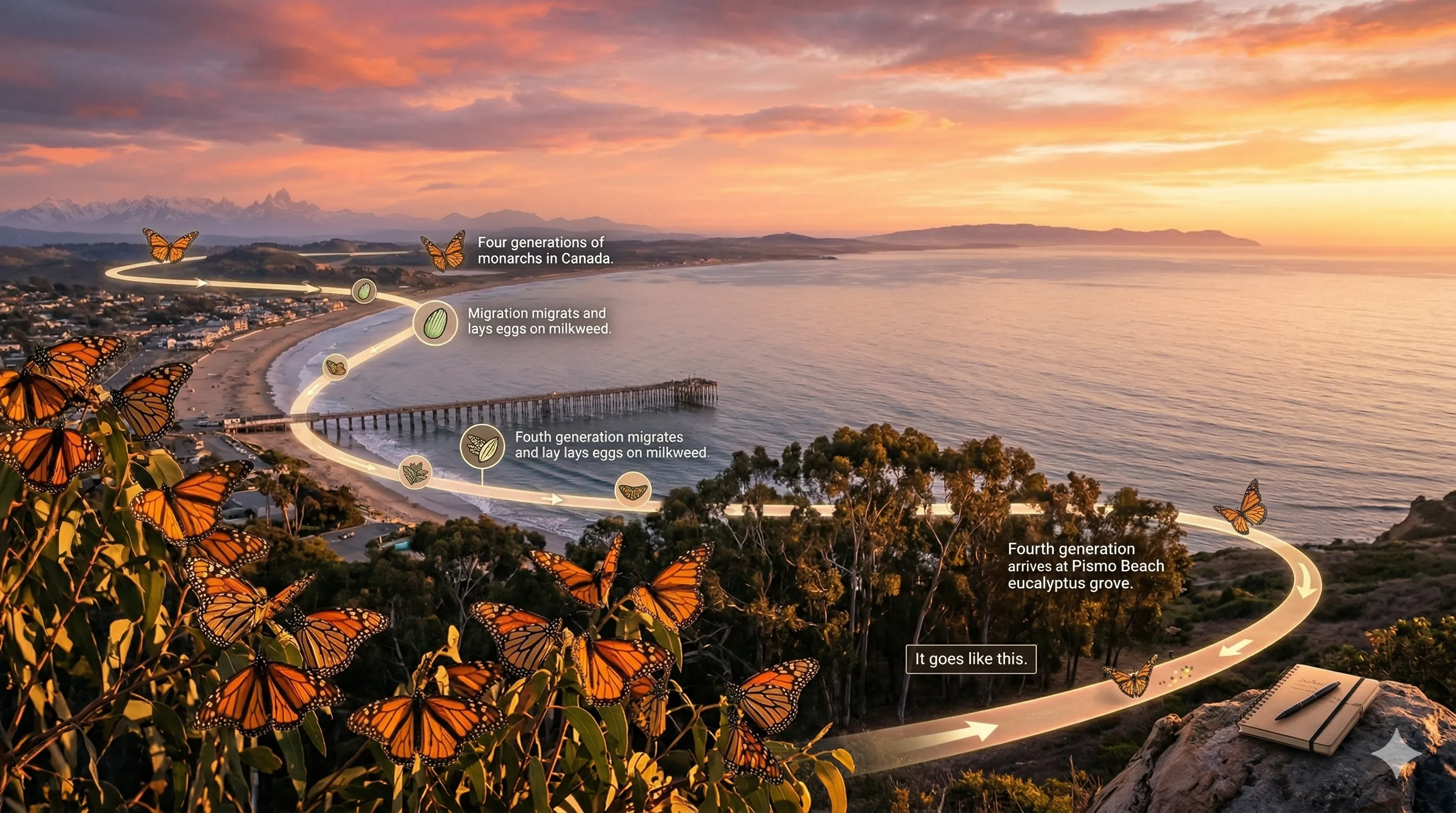
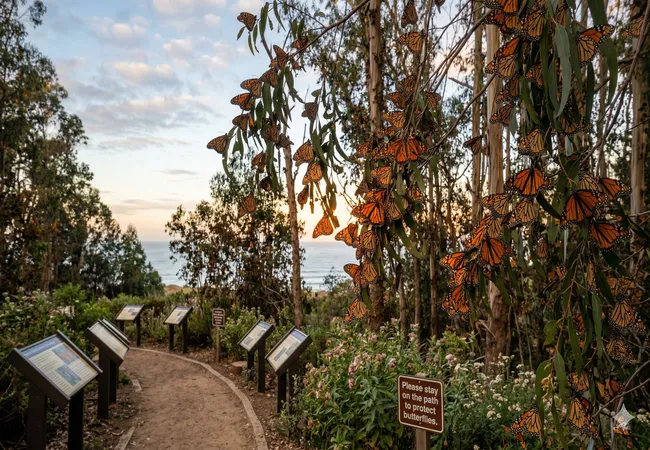
Pismo Beach usually has one of the largest concentrations of butterflies of any of the groves across California. And here's an interesting tidbit. The monarchs that migrate here have never been here before.
You see, like most insects, monarchs have very short lifespans. So, the butterflies that show up every winter are actually four generations removed from last year's wintering monarchs. Pretty wild, right? It goes like this.
The Four-Generation Journey
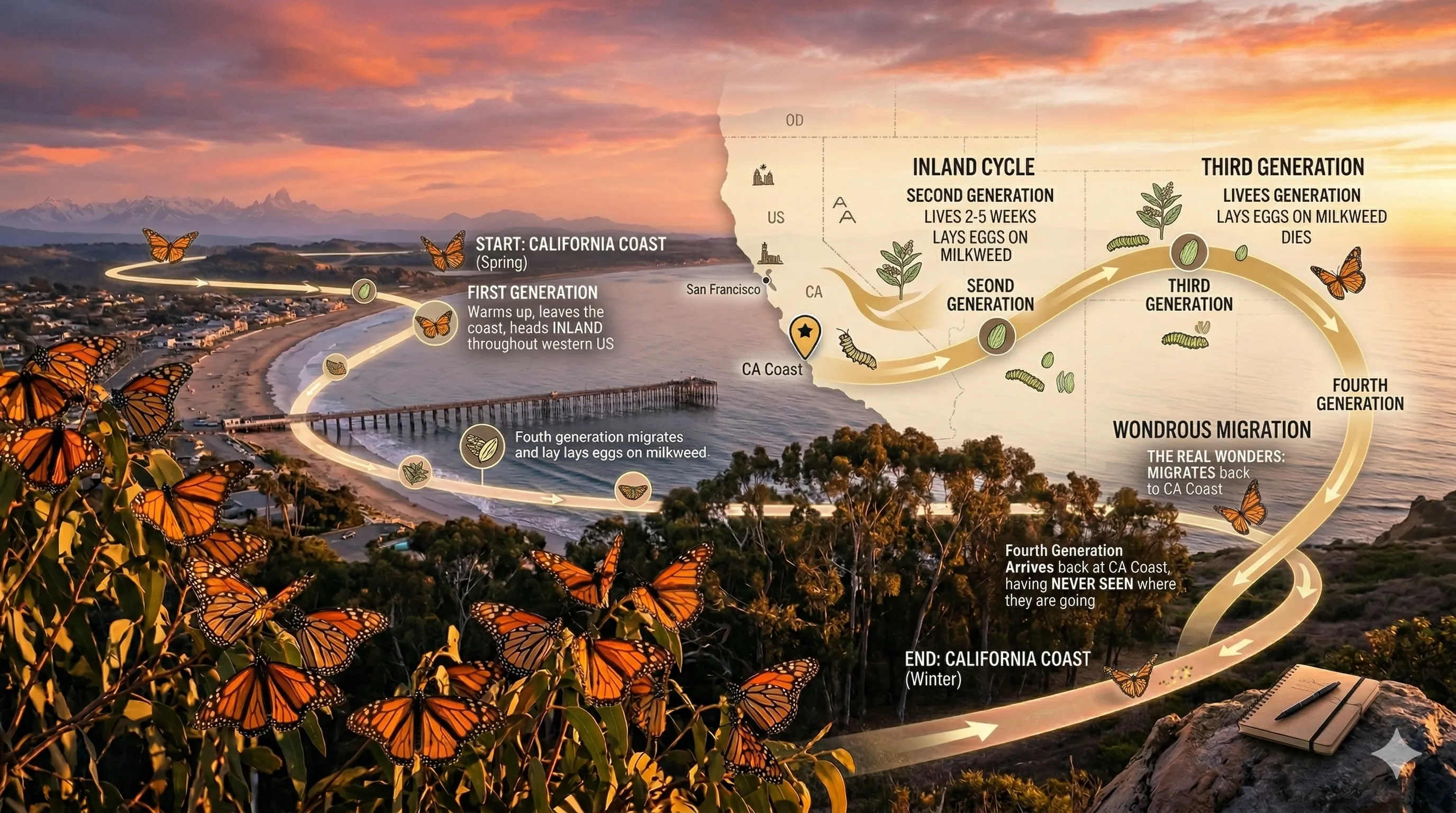
When it warms up, the first generation of monarchs here on the coast leaves and heads inland, throughout the western United States. They find places near milkweed to lay their eggs, which is the caterpillar's only source of food. And then, the butterflies die.
When the second generation is born, they live for about two to five weeks. They lay some eggs, and then they die. The third generation does the same thing.
They live for about two to five weeks, lay some eggs, and then also death. But, the fourth generation are the real wonders. They're born somewhere inland and migrate back to the California coast, having never seen where the heck they're going.
How They Navigate

And, they have a lifespan of six to nine months. Isn't that just amazing? But, what's even more amazing is that we really don't know how they do it. How do butterflies that have never been here before know where to go? Scientists do have some theories.
One guess is that the butterflies use the sun to point the way. But, the sun's not always visible, right? So, another theory is that they have some sort of internal magnetic compass, probably in their antenna, and they can use the Earth's magnetic field to point them in the right direction. So, maybe they use the sun as the first option, and the internal compass is their backup.
Or, another completely different guess is that there's something in their genetics that sets them up for migration. It's all a mystery for now. Well, however they got here, monarch populations are in trouble.
How You Can Help
In the last quarter-century, the count of monarch butterflies in Pismo Beach has decreased by 90%. Climate change, habitat loss, and the use of pesticides has really decreased the number of monarchs. But, you can help.
First, if you do visit a grove today, just be extra careful not to step on any butterflies. Back at home, avoid the use of insecticides and fungicides in your gardens. Try planting milkweed, since that's what monarch butterfly caterpillars depend on for food.
Or, if you can't do milkweed, you can also ask your local nursery about some native nectarine plants that can sustain butterflies as they're on the move. We can't do everything, I know that. But, each of us can do something.









 to fuel your ride
