



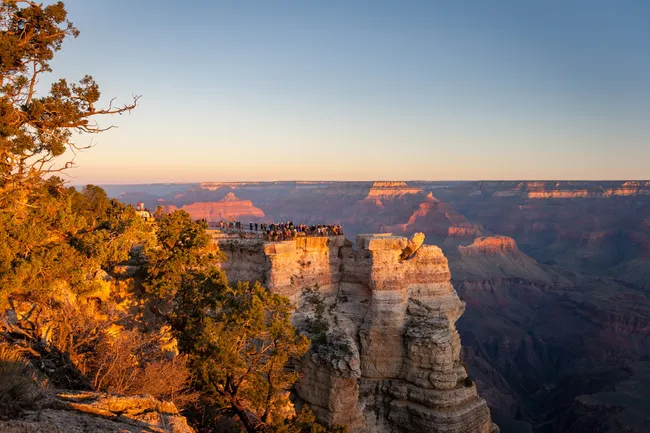
Grand Canyon West Rim vs South Rim: Which Should You Visit?

Key Takeaways:
- Choose the South Rim for classic Grand Canyon views, major hiking trails, and the best first-time visitor experience.
- Choose the West Rim for quicker access from Las Vegas, the Skywalk, and shorter, attraction-focused sightseeing.
- The South Rim is usually more budget-friendly, especially for families using a National Park pass.
- The West Rim works best for one-day trips, while the South Rim is better for longer visits.
- Spring and fall offer the best weather at both rims, with fewer crowds and more comfortable temperatures.
Table of Contents:
- What’s the Difference Between the West Rim and South Rim?
- Location, Location, Location
- Scenery & Views: West Rim vs South Rim
- Hiking at the West Rim vs. the South Rim
- Visitor Experience & Infrastructure
- Activities Available at Each Rim
- Cost Comparison: Which Rim Is More Expensive?
- Accessibility & Best Time to Visit
- Best of Both: Side by Side
- Explore Grand Canyon with Shaka Guide
- Faq
Sure, both offer jaw-dropping canyon views, but the overall experience couldn’t be more different.
Your ideal rim depends on what you want: iconic national park scenery, thrilling attractions, easy access, or classic hiking trails.
Here’s a side-by-side comparison to help you decide.
What’s the Difference Between the West Rim and South Rim?
 Shutterstock Image
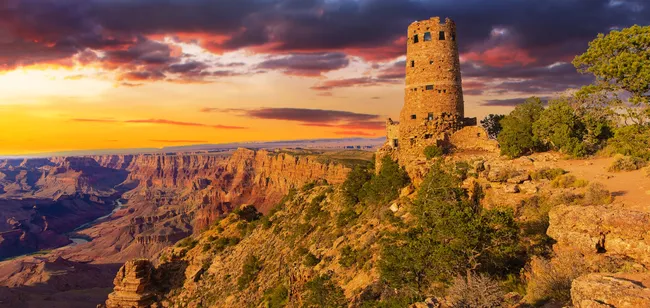
The South Rim is part of Grand Canyon National Park and is managed by the National Park Service.
It’s the most visited section of the canyon and features:
- classic postcard views
- historic lodges
- miles of scenic overlooks
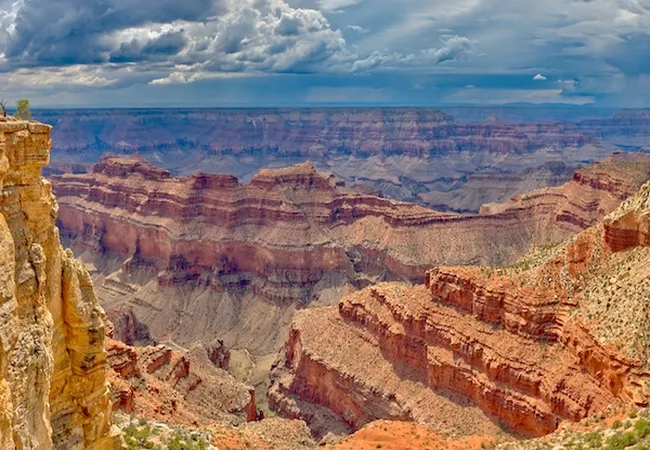
The canyon is wider and deeper here, with vast, layered rock formations stretching to the horizon.
The sweeping panoramas create that classic “wow” moment most people associate with the Grand Canyon.
And as far as hiking options? South Rim wins hands down.
The West Rim, on the other hand, is located on the Hualapai Tribal lands and is operated by the Hualapai Tribe.
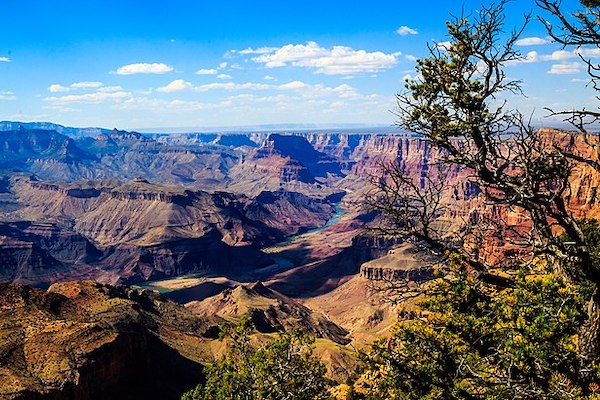
The West Rim feels narrower and more rugged. The views are closer and more intimate, and you can often see bends of the Colorado River below.
It doesn’t offer the same expansive scale as the South Rim — but it makes up for it with unique attractions like the Skywalk and easier access from Las Vegas.
There are plenty of shorter hiking trails, but none of the multi-day adventures of the South Rim.
In short, the South Rim gives you that traditional national park grandeur, while the West Rim focuses on accessibility and adventure-style attractions.
Location, Location, Location
 Shutterstock Image
The West Rim is about 2 to 2.5 hours from Las Vegas, making it the closest part of the canyon to the city.
This makes it great for day trips, helicopter tours, and quick getaways.
However, it’s about 4 hours from Phoenix and roughly 4 to 4.5 hours from Flagstaff, making it less convenient for travelers already exploring Arizona.
The South Rim is about 4.5 hours from Las Vegas but only 1.5 hours from Flagstaff and around 3.5 hours from Phoenix.
It’s more centrally located for Arizona road trips and is easier to incorporate into multi-day travel plans.
If you’re considering visiting multiple or all rims, the North Rim is about 4–4.5 hours from the South Rim by car and roughly 5–5.5 hours from the West Rim, depending on route.
There is no direct road across the canyon, so reaching another rim requires driving around it.

So, what’s the verdict on location? If you’re staying in Las Vegas and short on time, the West Rim wins for convenience.
If you’re exploring Arizona, or the canyon is your major tour focus, the South Rim is typically more accessible.
Scenery & Views: West Rim vs South Rim
 Shutterstock Image
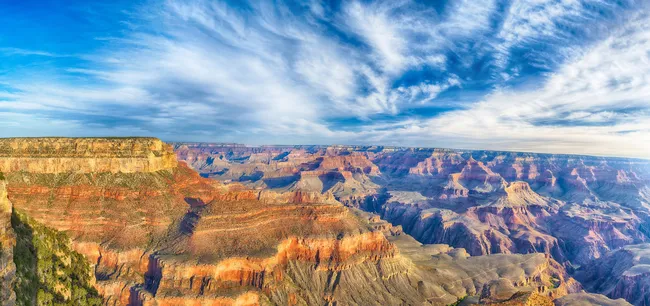
At the South Rim, most viewing happens along scenic routes like Hermit Road and Desert View Drive, where you can stop at numerous overlooks.
Each viewpoint reveals a different angle—side canyons, distant rock formations, and wide canyon corridors.
The landscape unfolds gradually as you drive, with consistently expansive and changing views.
At the West Rim, sightseeing centers around a few main areas, primarily Eagle Point and Guano Point. You park, then explore on foot.
From Guano Point, you can climb to a high lookout with broad views and visible sections of the Colorado River.
The canyon feels closer, but the overall viewing area is more limited.
Hiking at the West Rim vs. the South Rim
 Shutterstock Image
Hiking might be the biggest factor when deciding which rim you should visit.
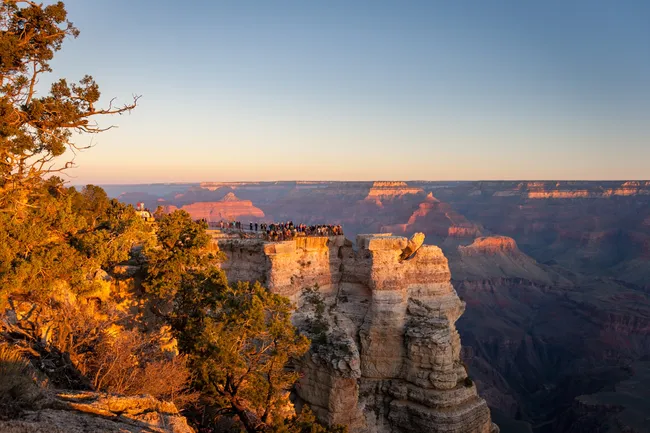
At the South Rim, hiking is one of the main attractions. Visitors can descend into the canyon on well-maintained corridor trails like Bright Angel and South Kaibab.
The Rim Trail provides miles of mostly flat walking along the canyon edge, making it accessible for a wide range of fitness levels.
At the West Rim, hiking options are more limited. There are walking paths and informal dirt trails around viewpoints like Guano Point and Eagle Point, but there are no developed trails that descend deep into the canyon.
Most exploration at the West Rim involves short scenic walks rather than full hiking experiences.
If hiking into the canyon is high on your priority list, the South Rim is the clear choice.
Visitor Experience & Infrastructure
 Shutterstock Image
Infrastructure? The South Rims got it. Lots of it, in fact. Visitor centers, museums, shuttle buses, restaurants, campgrounds, and historic lodges.
It’s built to handle millions of visitors a year, and it does that well. The tradeoff? It can feel busy. For some people, maybe too busy.
The West Rim is simpler. Fewer buildings, fewer services, fewer places to wander off into gift shops.
You visit key viewpoints like Eagle Point and Guano Point, use the internal shuttle, take it in, and move on.
Most people base themselves in Las Vegas and treat it as a focused day trip.
If you want amenities, exhibits, and plenty to explore, the South Rim delivers.
If you’d rather skip the crowds and keep things straightforward, the West Rim keeps it lean.

Activities Available at Each Rim
West Rim Activities
Grand Canyon Skywalk
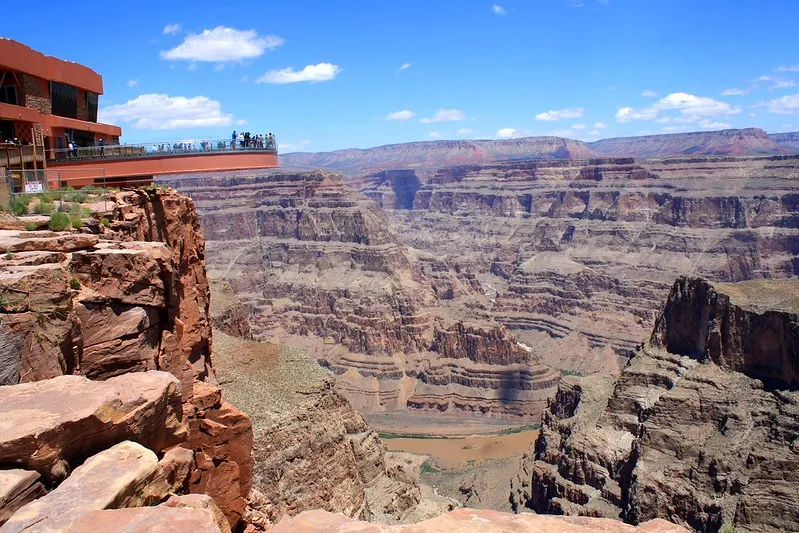
Walk 70 feet beyond the canyon’s edge on a glass bridge suspended 4,000 feet above the canyon floor. It’s a thrilling, bucket-list experience unique to the West Rim.
Helicopter & Boat Tours
Many tours depart from Las Vegas and land at the canyon floor. Some packages even include a boat ride on the Colorado River.
Hualapai Cultural Experiences

Learn about the Hualapai Tribe through cultural exhibits, performances, and local art displays at Eagle Point.
South Rim Activities
Scenic Rim Trail Walks
Walk along the paved Rim Trail for breathtaking views without strenuous hiking. Great for parents with strollers or those with limited mobility.
Hiking into the Canyon
Popular trails like Bright Angel and South Kaibab descend deep into the canyon for adventurous hikers.
Desert View Drive
Take a scenic drive with multiple overlooks ending at the historic Desert View Watchtower.
Hermit’s Rest Shuttle
Hike or ride your way along some of the most iconic viewpoints along the South Rim.
Cost Comparison: Which Rim Is More Expensive?
 Shutterstock Image
The South Rim charges a standard National Park entrance fee per vehicle, valid for seven days.
This fee also works with the America the Beautiful annual pass.
The West Rim has a higher base entry price, and many attractions (including the Skywalk) require additional fees.
If you’re traveling independently and already have a national park pass, the South Rim is typically more budget-friendly.
| Pass Type | South Rim | West Rim |
|---|---|---|
| Entry Fee | $35 per vehicle (7 days) | $50-67 Per Person |
| Cost for Family of Four | $35 total | $200-268 Total |
| Skywalk | n/a | $25-30 ($99 bundled) |
| Annual Pass | $80 | n/a |
Accessibility & Best Time to Visit
 Shutterstock Image
The South Rim is open year-round, but, because it sits at a higher elevation (about 7,000 feet), snow and partial closures are possible.
Summer brings heavy crowds but pleasant weather. The top of the rim stays warm but pleasant, while inner-canyon hikes can experience deadly levels of heat.
The West Rim is at a lower elevation and tends to be hotter, especially in summer. It’s also open year-round and generally less crowded than the South Rim.
Spring and fall are great for both rims, with mild temps and manageable crowds.
Which Rim Is Better for First-Time Visitors?
For first-time visitors seeking the classic Grand Canyon experience, the South Rim is usually the best choice.
It offers the most iconic views, extensive trails, and historic landmarks. Plus, it’s usually a lot cheaper.
However, if you’re visiting from Las Vegas and only have one day, the West Rim is far more convenient.
It’s also ideal for travelers who want a structured experience with guided tours, cultural immersion, and unique attractions like the Skywalk.
Best of Both: Side by Side
| West Rim | South Rim |
|---|---|
|
|
|
|
|
|
|
|
Explore Grand Canyon with Shaka Guide
Want to go from just visiting the canyon to knowing it? Our GPS-triggered storytelling guides you to scenic overlooks, shares local history, and helps you explore at your own pace. Turn your South Rim drive from an itinerary into an adventure.
Like this article? Share it on Pinterest!

Faq
Can you visit both rims in one trip?
Is the Skywalk worth it?
Which rim is better for hiking?
Which rim is better at sunrise or sunset?
Are entrance passes valid for both rims?
Written By:
Ready to explore the Grand Canyon?
Take Shaka Guide’s Grand Canyon South Rim Audio Tour for turn-by-turn directions, local stories, and the freedom to explore at your own pace.
Visiting more parks in the region?
Don’t miss our Arizona Tour Bundle — it includes tours for Sedona, Monument Valley, and many more!
Still planning?
Check out our South Rim Itinerary and Know Before You Go guide to prep for your trip.
Have questions?
We’re happy to help — email us at aloha@shakaguide.com.













 to fuel your ride
