



Know Before You Go — Black Canyon of the Gunnison National Park

Table of Contents:
- *Expect partial closures to campgrounds and trails while fire restoration and repairs are underway.
- What lies in the depths of the Black, Black Canyon?
- Start Planning!
- Budgeting and Hours of Operation
- Budget
- Entrance Fees (valid for 7 days)
- Annual Pass Options
- Good to Know
- Lodging
- Extra Expenses
- Hours of Operation
- Get Packing!
- Best Time to Visit
- Safety Information
- Additional Need to Know Information
- Wildfires and Recovery
- Leave No Trace
*Expect partial closures to campgrounds and trails while fire restoration and repairs are underway.
What lies in the depths of the Black, Black Canyon?
Well… a whole lotta' fun stuff, that’s for sure.
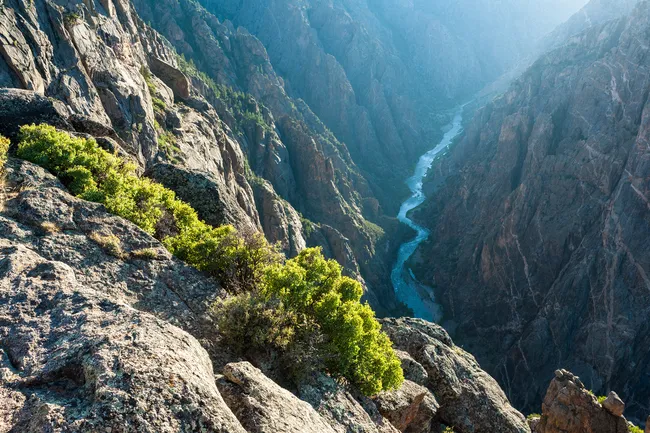
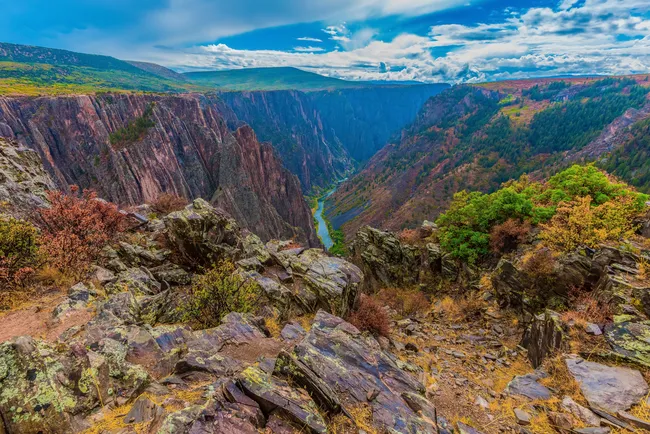
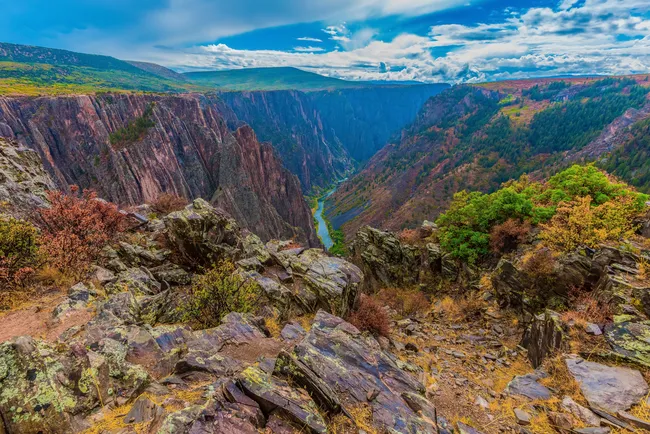
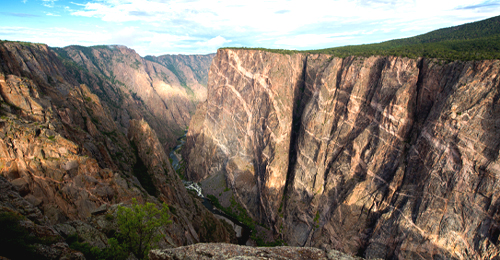
Black Canyon of the Gunnison is all about the dramatics—both in depth and in views. This is a place where sheer cliffs plunge nearly 2,000 feet straight down to the Gunnison River below. It’s one of the steepest, narrowest canyons in North America, carved slowly through some of the oldest rock on the continent.
Now here’s the deal: this park is all about big views and big geology. You’ll find scenic overlooks, short hikes, gravity-defying backcountry adventures, and some of the best stargazing in the whole state. And hey—this is Colorado we’re talking about, so that’s really saying something.
But as you might imagine, all that dramatic terrain also means the canyon is remote and rugged, so planning ahead can make a big difference.
In this Know Before You Go, we’ll cover the basics—how to get here, the best time to visit, what to bring, and a few tips to help you make the most of your trip to one of the most jaw-dropping canyons in the American West.
Start Planning!
Ready to set off for the highs and lows of the Black Canyon of the Gunnison? Here’s what you need to know before you go.
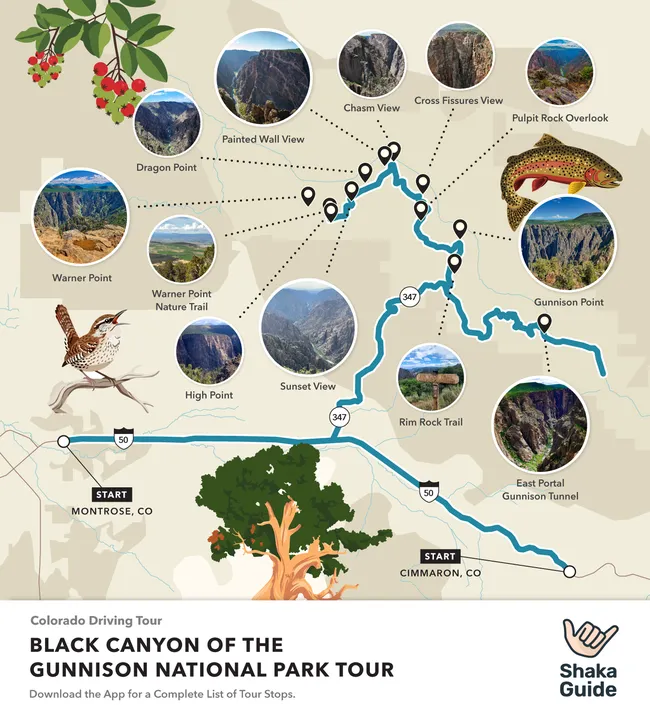
- This tour covers both the South and North Rims. You can visit both sides, or just one.
- The South Rim is less remote and easier for most visitors to get to.
- The South Rim portion of the tour lasts around 5 hours, covering 17 stops with 38 narration points.
- The North Rim portion lasts around 3 hours, covering 9 stops with 30 narration points.
- The South Rim begins from Montrose or Cimarron; both are short drives to the park entrance.
- The North Rim begins from Black Canyon Road, south of Crawford.
- Wear layered clothes and long pants—temperatures vary, and poison ivy is common.
- Bring bug spray and plenty of water; elevation is over 8,000 feet.
- All wilderness hikes need a permit—reserve in advance or get one onsite.
- The best time to visit is late spring through early fall; roads close in winter.

Budgeting and Hours of Operation
 Shutterstock Image
Budget
Great news! You won't spend a lot of money in Black Canyon?
...Why? Well, there's not a ton to buy.
South Rim has a visitor center where you can snag a few souvenirs. North Rim is pretty bare-bones, it's all about the views there.
For food, nearby towns can be a bit pricey, but not as bad as you might expect for a tourist area. Some of the local restaurants and breweries have some really excellent food...worth treating yourself at leat once if you can swing it. Want to save some money? Pack your own lunch and enjoy it with a view.
Entrance Fees (valid for 7 days)
Private Vehicle: $30 per vehicle (covers everyone inside)
Motorcycle: $25 per motorcycle
Individual (walking, biking, or entering without a vehicle): $15 per person
Children 15 and under: Free
Annual Pass Options
Black Canyon Annual Pass: About $55 (unlimited entry to this park for one year).
America the Beautiful Annual Pass: $80 (covers entry to all U.S. national parks and over 2,000 federal recreation sites for one year).
Good to Know
The park entrance pass is valid for both the South Rim and North Rim during the 7-day period.
Many visitors choose the $80 America the Beautiful pass if they plan to visit three or more national parks in a year, since it quickly pays for itself.
Lodging
Hotels near the canyon are pretty moderately priced, on average.
Montrose is the most convenient place to stay for the South Rim, with plenty of places to eat, get supplies, and shop.
Cimarron and nearby hotels or lodges are ideal for those wanting to visit both rims, but be aware that there aren't a lot of resources nearby. You'll probably still drive into Cimarron for supplies.
For the North Rim, most people stay in Hotchkiss or Delta. Hotchkiss is closer and pretty low-key, while Delta is quite a bit further, but a local hub with plenty of things to see and do.
Extra Expenses
All wilderness hikes for the Black Canyon of the Gunnison National Park require a wilderness use permit, including day hikes. (Some examples are Tomichi, Gunnison, and Warner.) They require a small processing fee.
They can be obtained on Recreation.gov in advance or at the visitor center the day before.
Hours of Operation
The park itself is open 24 hours a day.
However, tour stops have seasonal hours of operation, with most of the canyon's roads closing in winter. The site’s facilities and restaurants also have varying hours of operation, generally maintaining standard business hours.
-
Black Canyon General Store:
Monday–Saturday 11:00 AM – 5:00 PM
Sunday 1:00 PM – 5:00 PM -
Black Canyon Visitor Center Hours:
Typically open daily during the main season. Hours vary by time of year, so check the park website for current times. -
North Rim Ranger Station Hours:
Seasonal. Generally open late spring through early fall with limited hours. Check the park website before visiting.
Get Packing!
 Shutterstock Image
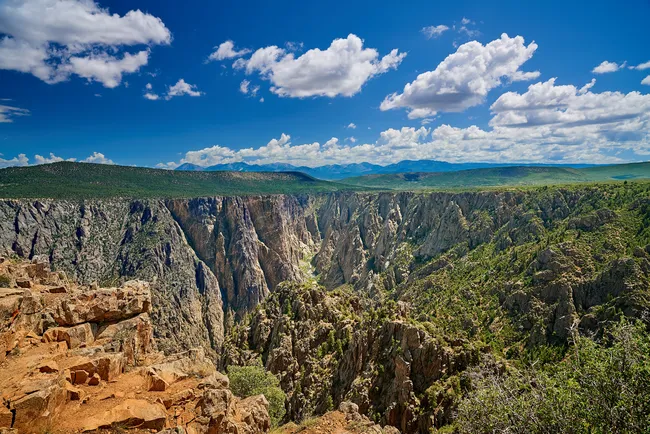
For this tour, you’ll want to prepare for hot, cold, and everything in between. Because you’re at a higher elevation, expect strong sun, cool mornings, and warm afternoons. If you’re planning to head down into the canyon, be prepared for temperatures to climb even higher as you get closer to the river.
- Layered clothing
- Bug Spray
- Lots of Water (really, lots and lots of water!)
- Long Pants (for inner canyon hikes)
- Hat
- Sunglasses
- Good, stable hiking boots
- A small container, quart-size or smaller (If you're there in serviceberry season!)
- Fishing Pole (if you want to fish in the Gunnison)
Best Time to Visit
Late spring, summer, and early fall are all good times to visit. The canyon road on the South Rim is closed to vehicle traffic in the winter months, and the North Rim closes entirely. Depending on weather, closures may affect the park as early as late fall or as late as early spring.
Safety Information
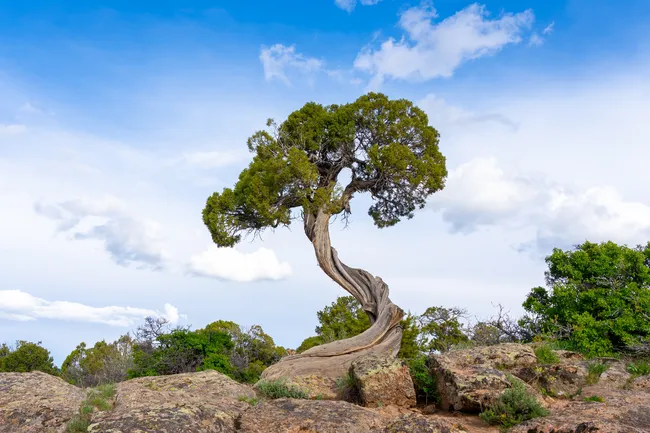
Inner Canyon hikes come with a few challenges—watch out for poison ivy, which grows abundantly along the trails. Wearing long pants and closed-toe shoes can help protect against exposure.
Also, keep in mind that the Black Canyon sits at over 8,000 feet in elevation. If you're not used to higher altitudes, take it slow, give yourself time to acclimatize, and stay hydrated.
Additional Need to Know Information
Please keep in mind that this tour covers the North and South Rims of the Black Canyon. These rims are separated by a long drive—about an hour and a half.
In my opinion, the best and most scenic way to get from rim to rim is via the Curecanti Recreation Area. But just know that even though this drive is fantastic—really, about as gorgeous as the park itself—it's super windy, narrow, and, honestly, a little scary.
Wildfires and Recovery
You may notice areas of burned forest during your visit. That’s because a major wildfire moved through parts of the park in the summer of 2025.
The blaze—known as the South Rim Fire—was sparked by lightning during a summer thunderstorm on July 10, 2025. The fire quickly spread through dry vegetation and rugged terrain, eventually burning more than 4,000 acres inside the park. For safety, the entire park was temporarily closed, and visitors were evacuated while firefighters worked to contain the blaze.
Some park facilities, campgrounds, and vegetation were damaged in the fire, and you may still see charred trees and blackened hillsides, especially along parts of the South Rim.
But fire is also a natural part of the ecosystem here. For thousands of years, lightning-caused fires have helped clear out old vegetation, recycle nutrients, and make room for new growth. In fact, not long after the flames passed through, new grasses and plants began sprouting from the ash.
Recovery takes time, and some areas of the park may still have temporary closures or restoration work underway. So it’s always a good idea to check current conditions before you visit.
Leave No Trace
While exploring, we encourage you to abide by the leave-no-trace principles. Embrace the outdoors responsibly with our commitment to preserving natural wonders. This is especially important in the wake of fire recovery.
Respect wildlife habitats, minimize your footprint, and create memories, not waste. By following Leave No Trace principles, you contribute to the longevity and beauty of our planet's most stunning landscapes.

Take the Black Canyon of the Gunnison Audio Tour with Shaka Guide and explore at your own pace with stories, directions, and must-see stops along the way.
Still planning? Check out our Black Canyon Itinerary to prep for an epic day.
Need help? Email us anytime at aloha@shakaguide.com!
Like this article? Share it on Pinterest!

Rachel is a storyteller, nature nerd, and park enthusiast who believes every trail has a tale. When she first visited Yellowstone, she was captivated by the steaming geysers, thundering waterfalls, and wild, wide-open spaces.
Since then, she’s explored national parks across the country, learning the history, ecology, and culture that shape these wild places. Now, she’s on a mission to share the stories that live in the land—and the places that make us feel small in the best way.
Written By:





 to fuel your ride
