



Why does Lake Tahoe Never Freeze?

Key Takeaways:
- Lake Tahoe never freezes due to its immense size and thermal inertia.
- The region's mild winter temperatures keep the lake's surface water above freezing.
- Thermocline mixing prevents the surface temperature from dropping low enough to freeze.
- Strong winds contribute to the constant mixing of the lake's water, hindering freezing.
- Freshwater inflow from streams and geothermal activity helps maintain the lake's liquid state.
Table of Contents:
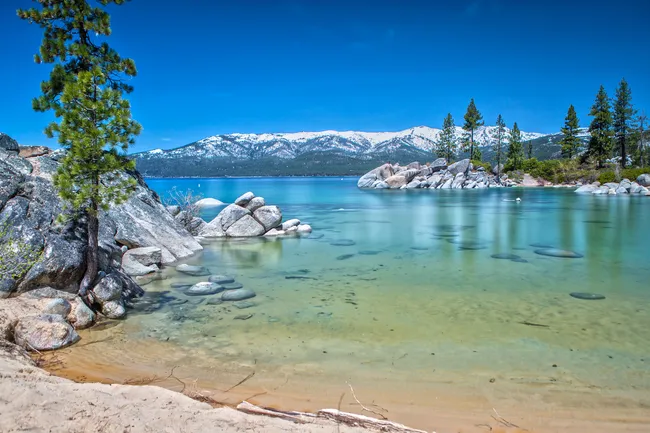
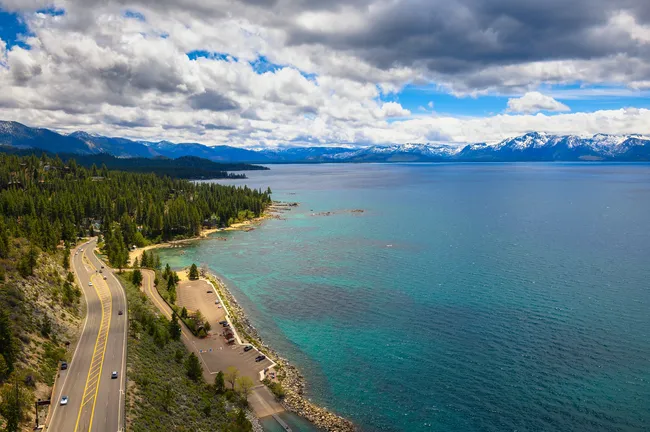
Lake Tahoe, straddling California and Nevada, is a world-famous destination. However, one quirk of this area is that the massive lake itself never freezes! This intriguing phenomenon is due to several reasons:
1. It’s too big
With a maximum depth of about 1,645 ft (the second deepest in the country) and a total volume of approximately 39 trillion gallons of water, the lake has immense thermal inertia. This simply means that it’s massively difficult to change the temperature of all of that water.
2. It doesn’t get very cold
Situated in a desert, Lake Tahoe’s surrounding area generally doesn't plunge to the extreme winter lows seen in some other places on Earth. The average surface water temperature in winter hovers around 41 F, sitting comfortably above the freezing point.
3. The water stays in motion
 Shutterstock Image
This is a process called "thermocline mixing." During the warmer months, the lake develops distinct temperature layers, being warmer up top and colder deeper down.
As the temperature drops in winter, the top layer cools down, causing it to become denser and sink. This sinking causes the lake to effectively “mix,” not allowing the surface temperature to sink low enough.
4. Strong Winds
Strong winds also move Lake Tahoe’s water around. This constant churning and mixing make it difficult for the water to reach the freezing point.
5. It’s fed by streams and springs
The constant influx of freshwater from many streams and underwater springs helps maintain the lake's liquid state. The inflow of warmer water, even if only slightly warmer, prevents the entire body of water from cooling uniformly and freezing.
6. Geothermal Activity
The presence of geothermal activity in the region, manifested in hot springs along the lake's edge, contributes to warming the water slightly, in small areas. This warmth helps offset the cooling effects of winter temperatures.
Essentially, this all means that Lake Tahoe will never completely freeze over. However, if you happen to visit in the middle of an especially cold winter, you may spot some ice along the edges!
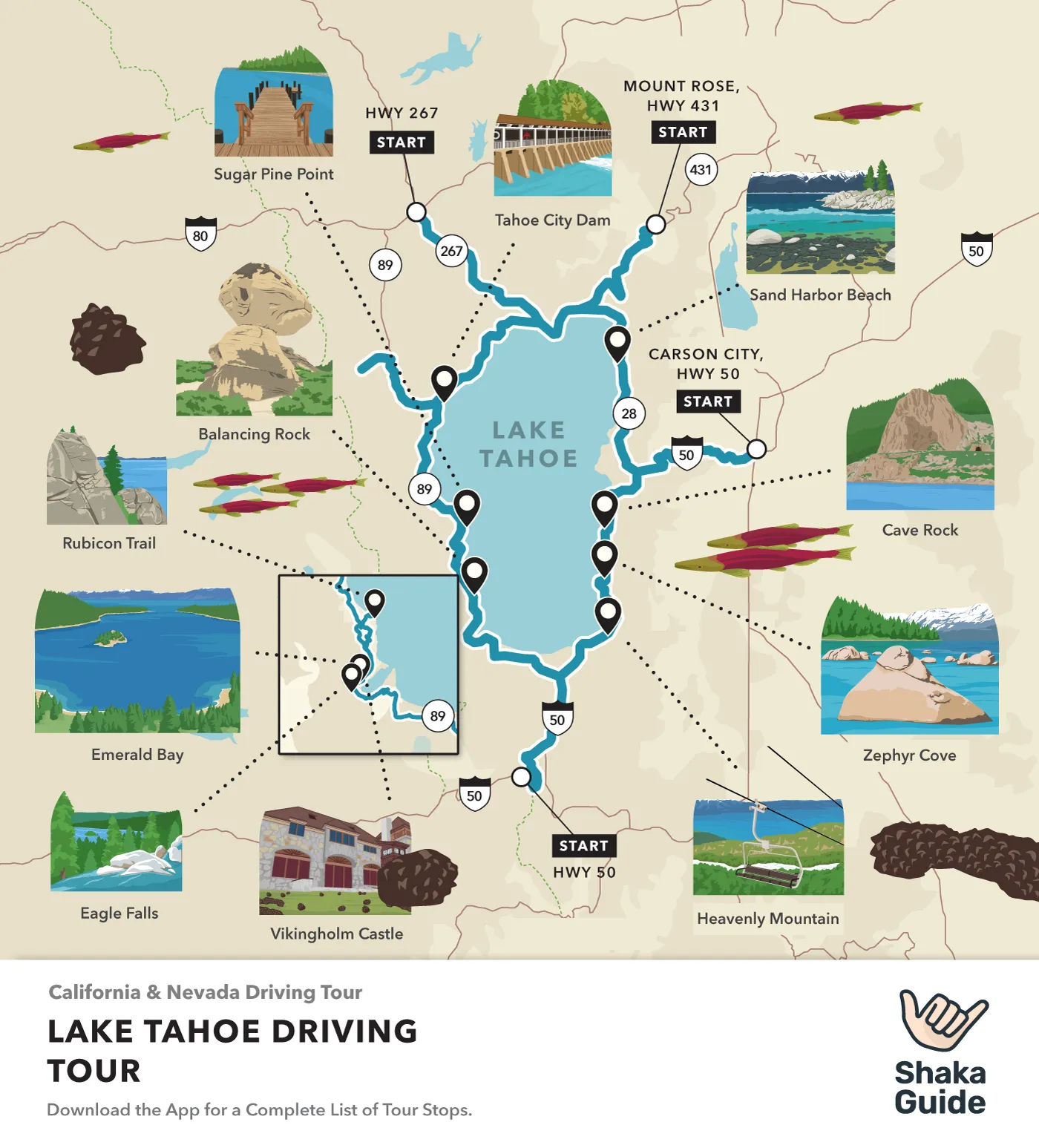
But if you want to check out Lake Tahoe and experience all of this for yourself with the Shaka Guide Lake Tahoe driving tour, winter is not the season to do so!
On our Lake Tahoe tour, we’ll make sure you don’t miss a thing, as long as you plan to drive around the lake in late spring through early fall, when snow and ice have not led to road closures!
That way, we can be sure to take you to all of the famous lakeside stops, along with some lesser-known local gems!

Like this article? Share it on Pinterest!

Written By:
We hope that we’ve given you all the information you need to make the most of your day. Your vacation is extremely important to us so if you have any questions feel free to reach out at aloha@shakaguide.com.
For more detailed information to help you plan, check out our Lake Tahoe Itinerary and Know Before You Go article.









 to fuel your ride
