



Library of Congress DC Guide: Capitol Hill Story
Table of Contents:
[Transcript]
America's Archive That Never Lends a Book
This is a living archive that preserves the American story in all of its forms. People often ask, can you check out books from the Library of Congress? And the answer is no, nothing leaves the building. Members of Congress and a few top officials can have materials brought to them, but for everyone else, the collections stay right here.
740 Books and a Big Idea
The Library of Congress was the idea of the Founding Fathers. They felt that Congress needed its own reference library to help lawmakers write and debate legislation. Will I sound lame if I remind the kids out there that people survived for centuries without the internet? Uh, no Wi-Fi, no AI, no problem.
Burned Down, Then Saved by Jefferson's Shelves
The library began simply, just 740 books and a few maps to support the new government, all kept inside a few rooms in the Capitol building. Then, just 14 years later during the War of 1812, British troops burned down the building and everything in it. That might have been the end of the idea of a Library of Congress until Thomas Jefferson stepped in.
He sold his personal library of nearly 6,500 volumes to Congress. Jefferson had amassed volumes about science, philosophy, history, world literature, you name it, he had it.
The Grand Building That Rose in Its Place
But by the 1870s, the library had outgrown the Capitol, and so Vermont Senator Justin Morrill pushed for a grand standalone building.
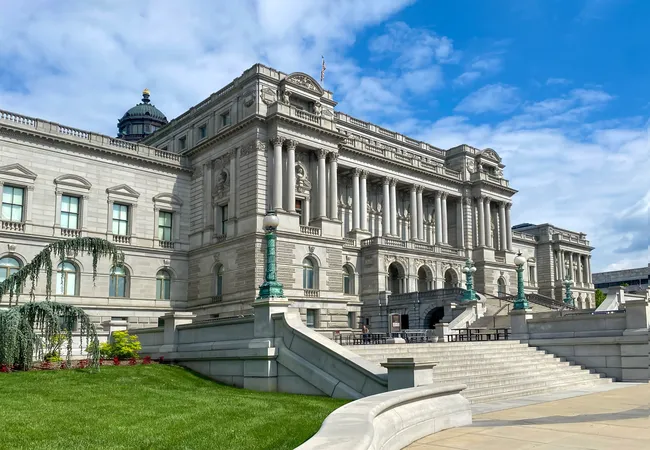
Washington architects John L. Smithmeyer and Paul J. Pelz designed it, and construction lasted from 1886 to 1897. They called it the Jefferson Building, named after the man who saved it all. And when it finally opened in 1897, it was celebrated as one of the most ornate public buildings in America.
What's Waiting Inside for You
There's a lot to admire when you go into the Library of Congress, but pay special attention to the grand golden-domed main reading room. If you're 16 or older, you can get a free reader ID and actually sit down in the reading room to use the materials, whether that's a Civil War battle map, an early recording of Ella Fitzgerald, or even a newspaper from the day you were born. And speaking of that, the collections here really are jaw-dropping.
History You Can Actually Hold
Imagine holding history in your hands. The library has one of only a few surviving Gutenberg Bibles. Music lovers might be surprised to find George Gershwin's handwritten score for Rhapsody in Blue, and the very piano he composed it on.
The library holds one of the largest collections of comic books in the world, over 140,000 of them, including the first appearance of Superman from 1938. It keeps baseball cards dating back to the 1880s, early video games, and recordings of legendary voices like Billie Holiday and Martin Luther King Jr.
There are maps that show how people imagined the world centuries ago, alongside charts that guided Apollo astronauts to the moon. You can also find early websites, maybe even your first Myspace page, millions of tweets, and even old commercials, so that one day people will look back and study how we lived in the digital age.







 to fuel your ride
